

Introduction
The Indian Premier League (IPL) has become one of the most lucrative and popular cricket leagues globally since its inception in 2008. One of the critical factors behind the IPL's success is its media rights, which have evolved significantly over the years. This article explores the evolution of IPL media rights, examining how they have transformed the financial landscape of cricket in India and enhanced the global reach of the sport.
The Birth of IPL Media Rights
The IPL was established by the Board of Control for Cricket in India (BCCI) in 2008, and with it came a new approach to broadcasting cricket. Initially, the media rights were sold for a modest sum.
-
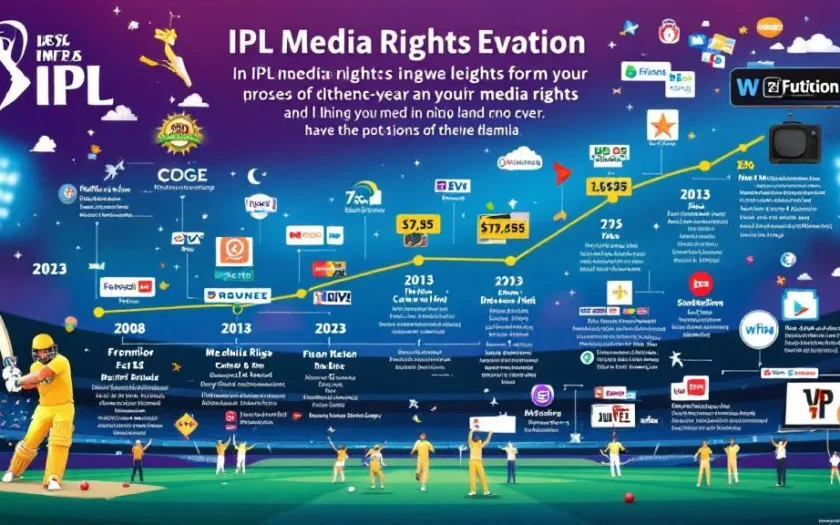
2008-2011: The first media rights auction set a foundation for what was to come:
- Sold to Sony Entertainment Television for approximately $1 billion over 10 years.
- Marked the beginning of a new era in sports broadcasting in India.
The league's format and entertaining nature attracted a massive audience, prompting a reevaluation of its media rights.
The First Major Revision (2012-2017)
With the success of the IPL, the BCCI decided to auction the media rights again in 2012.
- 2012 Auction:
- The rights were sold to Star India for a whopping $1.8 billion for five years.
- This deal included both television and digital broadcasting rights, highlighting the shift towards digital consumption.
This period also saw the introduction of innovative broadcasting techniques, including:
- Multiple camera angles and 360-degree views.
- Real-time statistics and player tracking technology.
- Enhanced viewer engagement through social media integration.
The Cash Cow of Media Rights (2018-2022)
The 2018 IPL media rights auction was a game-changer, reflecting the league's immense popularity and the growing demand for cricket content.
- The media rights were divided into three primary categories:
- Television rights (India)
- Digital rights (India)
- Overseas rights
Record-Breaking Auction
The 2018 auction was a watershed moment:
- Star India won the television rights for $2.55 billion (approximately ₹16,347 crore).
- Digital rights were sold to Facebook for $610 million.
- Overseas rights also fetched significant sums, ensuring the IPL's reach extended beyond Indian shores.
Factors Influencing the Surge in Media Rights
Several factors contributed to the staggering increase in media rights:
- Increased viewership: The IPL attracted millions of viewers, both on television and online.
- Globalization of cricket: The IPL became a platform for international players, enhancing its appeal worldwide.
- Advent of digital platforms: The rise of OTT (Over-the-Top) services made cricket accessible to a broader audience.
The Latest Auction (2023)
The 2023 IPL media rights auction was monumental, reflecting the ongoing evolution in broadcasting and viewership habits.
Key Highlights
- BCCI introduced a new bid structure, allowing for more flexibility and competition.
- The rights were divided into five categories:
- Television rights (India)
- Digital rights (India)
- International broadcast rights
- International digital rights
- Rest of the world rights
Record-Breaking Revenue
The 2023 auction brought in an unprecedented sum:
- Total media rights revenue reached approximately ₹48,390 crore (around $6 billion).
- Viacom18 emerged as a critical player, acquiring significant digital rights, indicating the growing importance of online streaming platforms.
The Impact of IPL Media Rights on Cricket
The evolution of IPL media rights has had far-reaching implications for cricket in India and beyond.
Financial Impact
- The massive sums generated from media rights have allowed franchises to invest in better facilities, player development, and marketing.
- Increased revenue has also led to higher player salaries, making cricket a viable career option for many.
Global Reach and Popularity
- The IPL has become a global phenomenon, with matches being broadcast in over 100 countries.
- International players participating in the league have helped popularize cricket in regions where the sport was less known.
Changes in Broadcasting
- The IPL has set new standards for live sports broadcasting, including user engagement through interactive content.
- The introduction of augmented reality and virtual reality experiences has changed how fans consume cricket.
Challenges Ahead
While the evolution of IPL media rights has been largely positive, several challenges lie ahead:
- Sustainability: Maintaining viewer interest and engagement over the long term as the novelty of the league wears off.
- Competition: Other leagues worldwide are vying for viewer attention, which could affect IPL’s dominance.
- Technological advancements: The need to keep up with rapidly changing technology and viewer preferences.
Conclusion
The evolution of IPL media rights has been a remarkable journey that has transformed the cricketing landscape in India and beyond. From its humble beginnings to becoming a multi-billion-dollar enterprise, the IPL has set a benchmark for sports leagues worldwide. As technology continues to evolve and viewer preferences shift, the IPL will undoubtedly adapt, ensuring it remains at the forefront of entertainment and sports broadcasting.
The future of IPL media rights promises to be just as exciting, with endless possibilities for innovation, engagement, and growth, both on and off the field.